Home · Catalogue · Religion & Theology · S.I.10233
Essays on Several Important Subjects in Philosophy and Religion.
Glanvill, Joseph · London
- Author
- Glanvill, Joseph
- Date
- 1676
- Place
- London
- Publisher
- Printed by J.D. for John Baker and Henry Mortlock
- Language
- English
- Binding
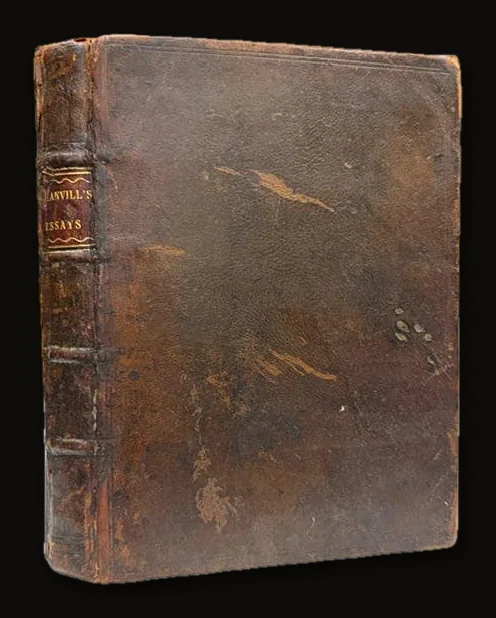
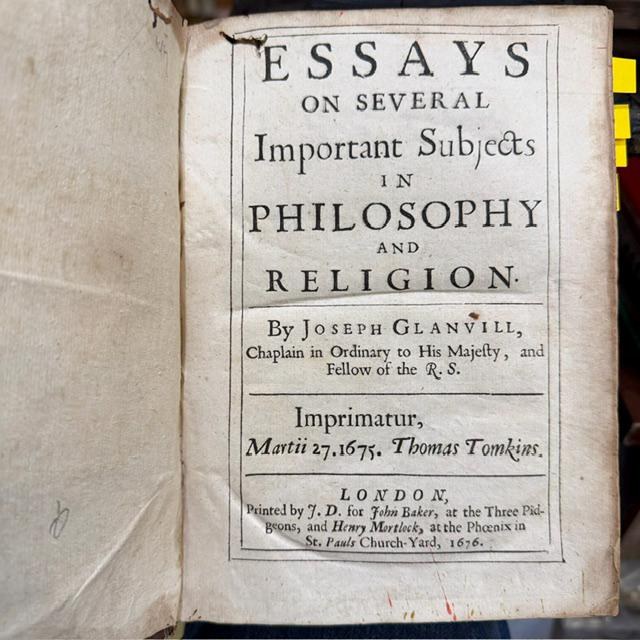
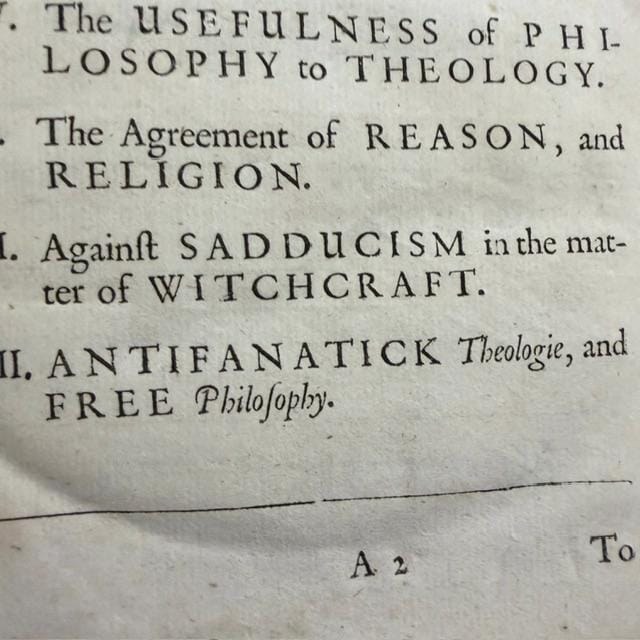
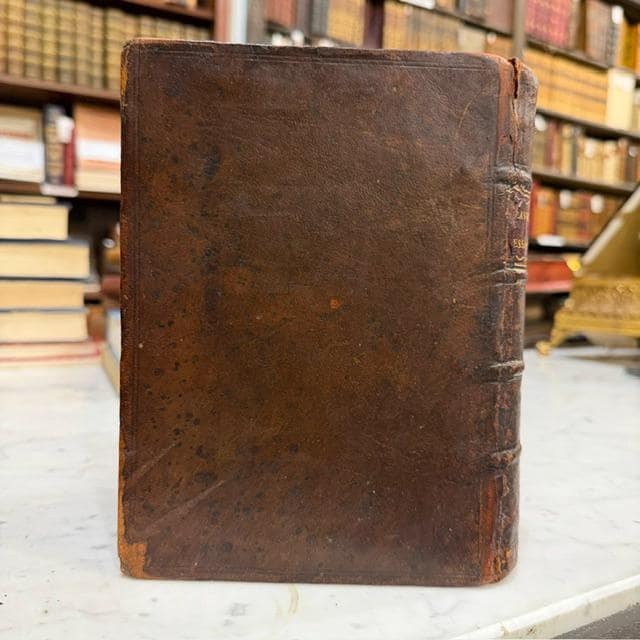
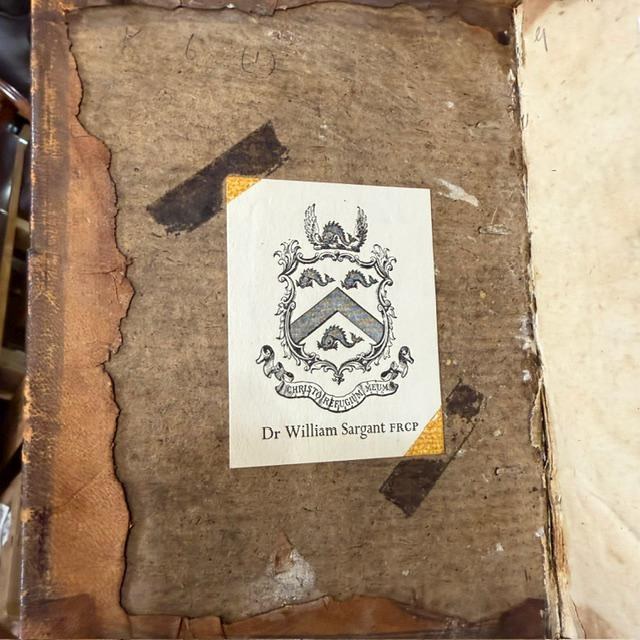
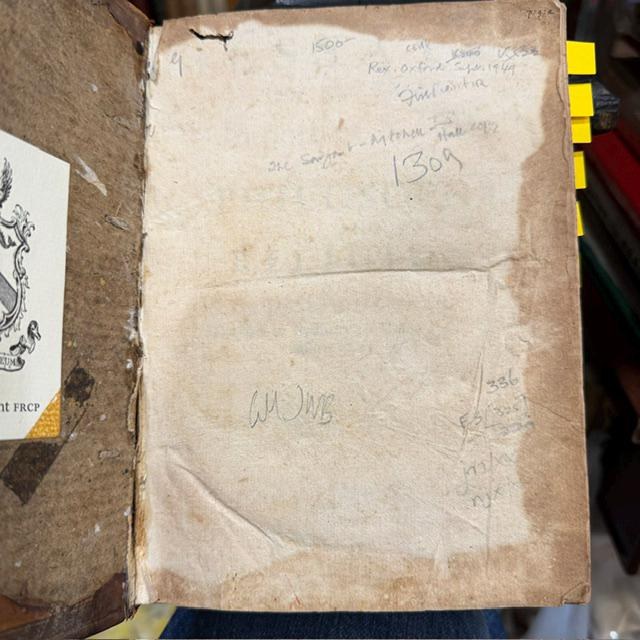
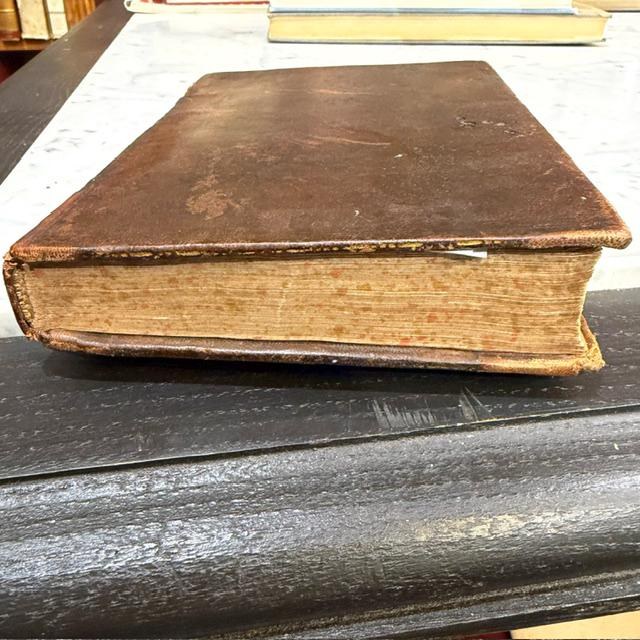
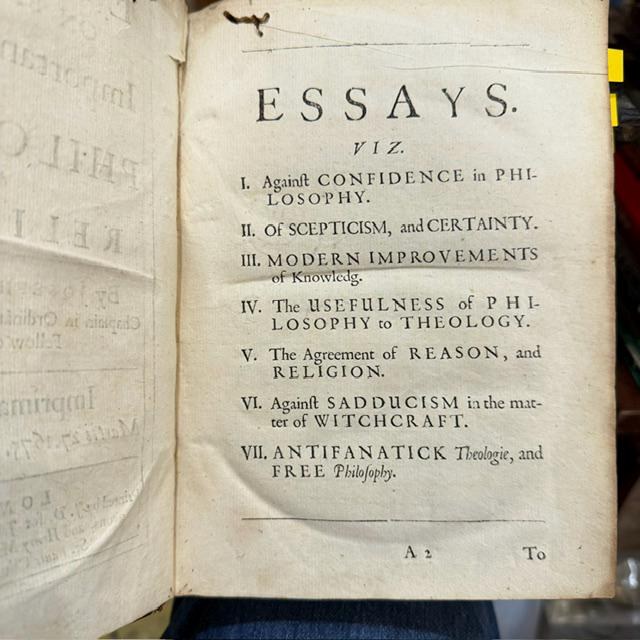
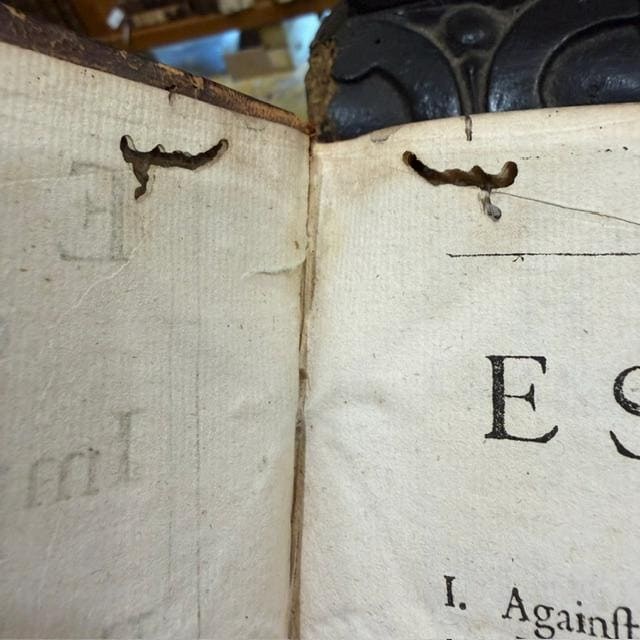
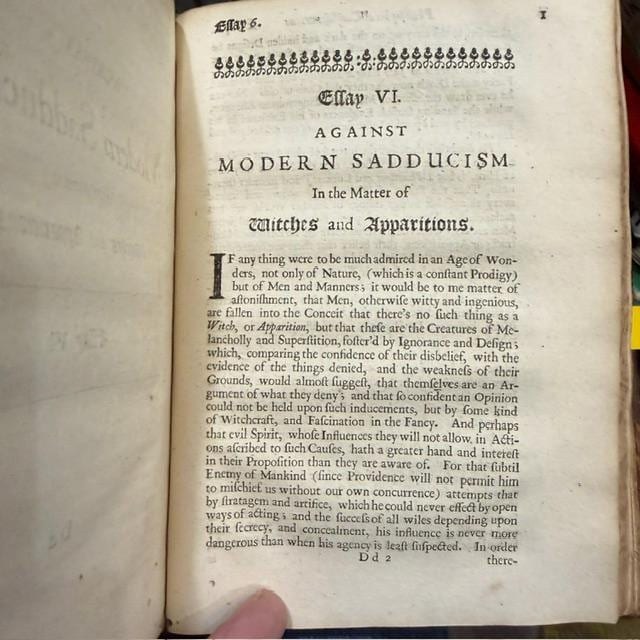
- 8vo.(5.5" x 7.5") Seven essays, separately paginated , each (except the first) with a divisional title-page. [xvi], 66; [2], 56; [2], 43; [1]; [2], 28; [2], 6; [1]; [2], 58, [3, advertisements] pp. Title within double rule border. Contemporary calf, hinges of upper cover split at top and bottom but holding; bookplate of Dr. William Sargent to front pastedown. Pencil booksellers notes to first free endpaper. Spine with four raised bands, gilt lettering to chipped red leather in second compartment. All edges lightly speckled red and brown. Large wormhole in top left margin through first 32 leaves, wormholes in middle of book in lower inner margin, otherwise a good crisp copy. Most of these essays are revised from Glanvill's earlier philosophical texts: the seventh, which was written for this collection, integrates the Cambridge Platonists into a continuation of Francis Bacon's New Atlantis (1627). The essays are: “Against Confidence in Philosophy”; “Of Scepticism and Certainty”; “Modern Improvements of Knowledge”; “The Usefulness of Philosophy to Theology”; “The Agreement of Reason, and Religion”; “Against Sadducism in the Matter of Witchcraft”; and “Anti-fanatical Religion and Free Philosophy.” Norman 908 noting that the essay on “modern improvements” contains “reviews of several of Robert Boyle’s works and praises Harvey’s discovery of the circulation of the blood …” Norman also observes that Glanvill, in the sixth essay, “attempted to establish a scientific and philosophical basis for a belief in the supernatural and is generally considered to be the founder of psychical research.” Wing G. 809.
- Format
- The Anglican clergyman and controversialist Joseph Glanvill (1636–1680) is notable for having anticipated Hume’s sceptical views on causation. He was also a spirited defender of the scientific work of the Royal Society, which he saw as entirely consistent with the Christian faith. At the same time he believed ardently in the existence of witches and demons, and saw their denial by such as Hobbes and Spinoza as the first step towards atheism. All these facets of Glanvill’s thoughts are reflected in the essays published here.
- Category
- Religion & Theology
- Record
- S.I.10233
Essays on Several Important Subjects in Philosophy and Religion. Glanvill, Joseph. 1676. London: Printed by J.D. for John Baker and Henry Mortlock. 8vo.(5.5" x 7.5") Seven essays, separately paginated , each (except the first) with a divisional title-page. [xvi], 66; [2], 56; [2], 43; [1]; [2], 28; [2], 6; [1]; [2], 58, [3, advertisements] pp. Title within double rule border. Contemporary calf, hinges of upper cover split at top and bottom but holding; bookplate of Dr. William Sargent to front pastedown. Pencil booksellers notes to first free endpaper. Spine with four raised bands, gilt lettering to chipped red leather in second compartment. All edges lightly speckled red and brown. Large wormhole in top left margin through first 32 leaves, wormholes in middle of book in lower inner margin, otherwise a good crisp copy. Most of these essays are revised from Glanvill's earlier philosophical texts: the seventh, which was written for this collection, integrates the Cambridge Platonists into a continuation of Francis Bacon's New Atlantis (1627). The essays are: “Against Confidence in Philosophy”; “Of Scepticism and Certainty”; “Modern Improvements of Knowledge”; “The Usefulness of Philosophy to Theology”; “The Agreement of Reason, and Religion”; “Against Sadducism in the Matter of Witchcraft”; and “Anti-fanatical Religion and Free Philosophy.” Norman 908 noting that the essay on “modern improvements” contains “reviews of several of Robert Boyle’s works and praises Harvey’s discovery of the circulation of the blood …” Norman also observes that Glanvill, in the sixth essay, “attempted to establish a scientific and philosophical basis for a belief in the supernatural and is generally considered to be the founder of psychical research.” Wing G. 809. The Anglican clergyman and controversialist Joseph Glanvill (1636–1680) is notable for having anticipated Hume’s sceptical views on causation. He was also a spirited defender of the scientific work of the Royal Society, which he saw as entirely consistent with the Christian faith. At the same time he believed ardently in the existence of witches and demons, and saw their denial by such as Hobbes and Spinoza as the first step towards atheism. All these facets of Glanvill’s thoughts are reflected in the essays published here.
Condition
Good
Guaranteed authentic and as described · 7-day returns · free US shipping — our terms. Subject to prior sale.