Home · Catalogue · Autographs & Manuscripts · S.I.3787
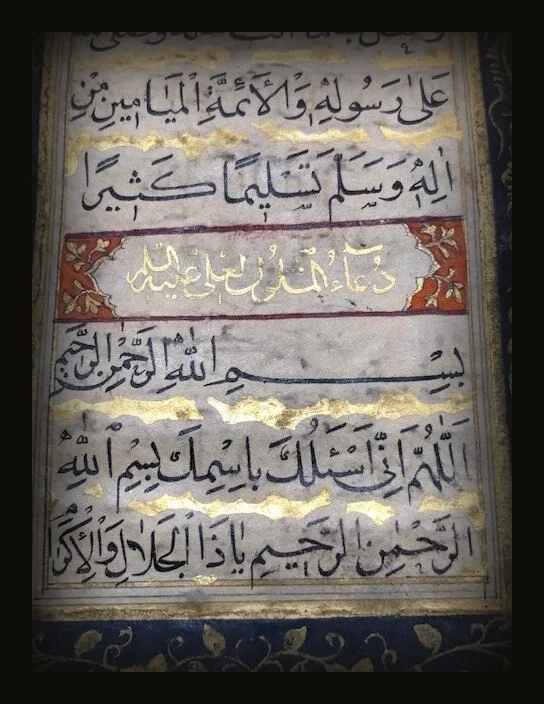
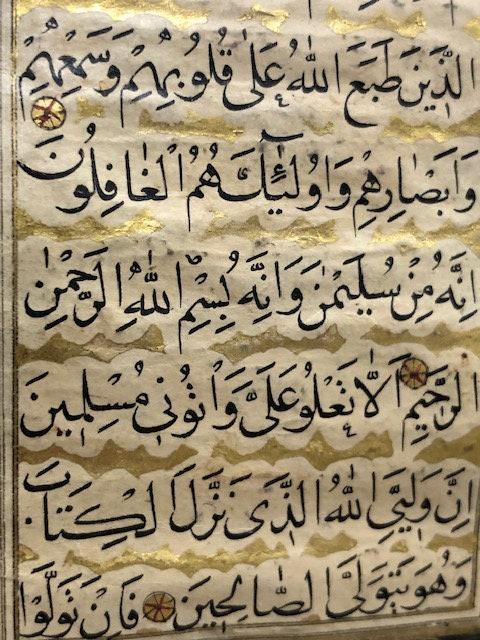
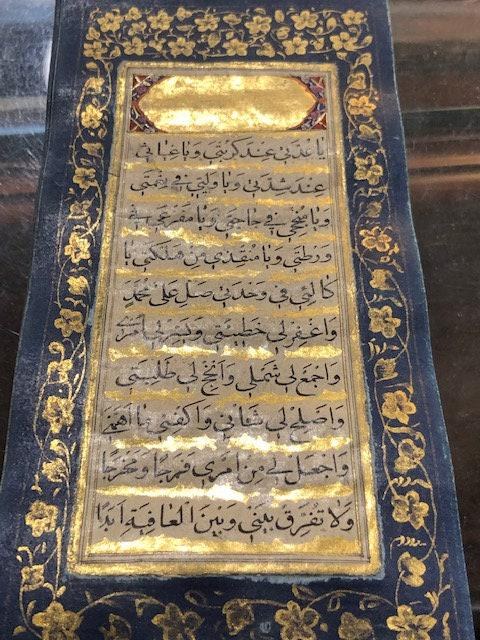
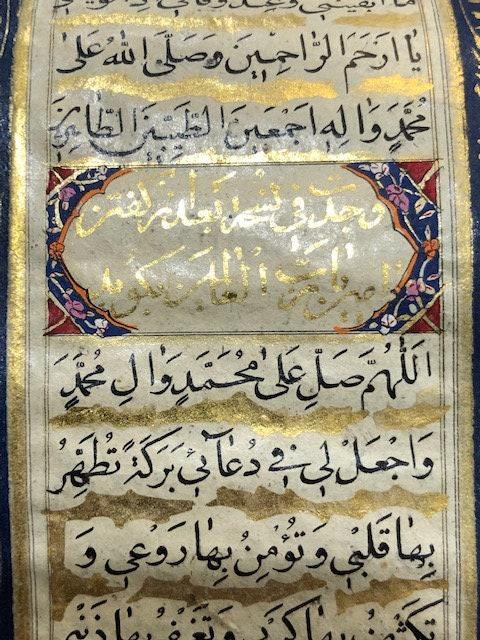
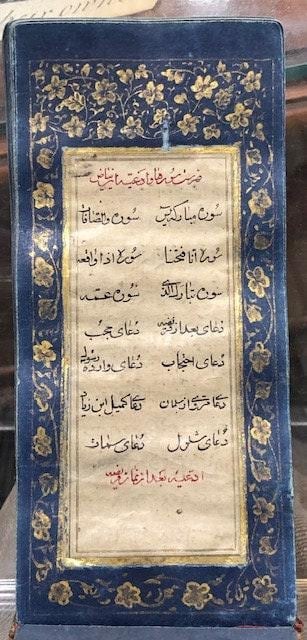
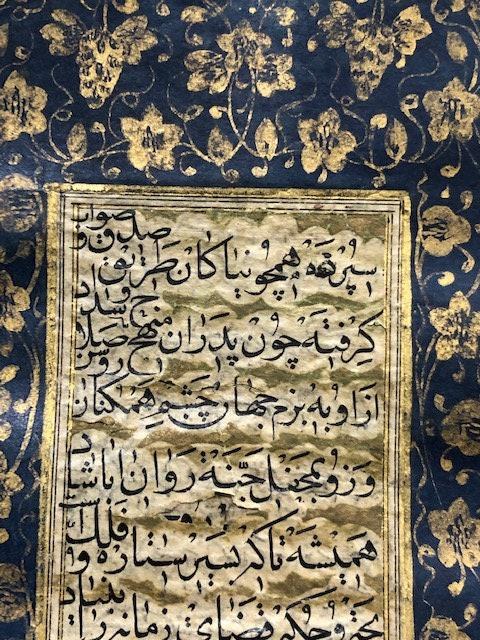
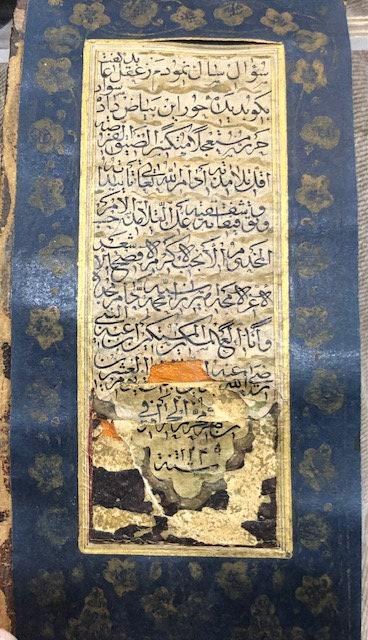
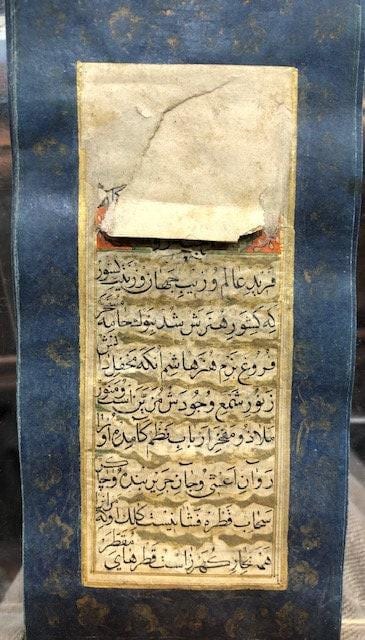
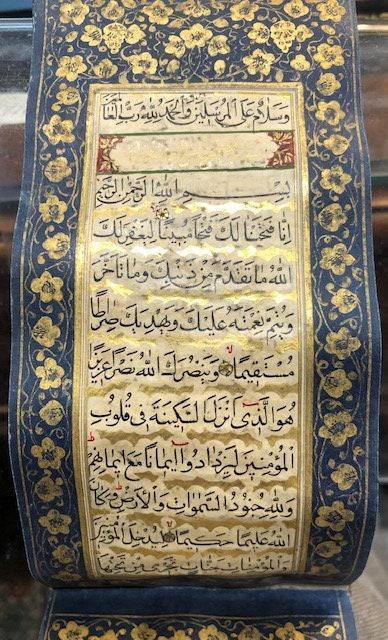
Arabic QUR'AN Surahs and Prayers
Persia
- Date
- 17/18 cent.
- Place
- Persia
- Publisher
- zz
- Language
- English
- Binding
- 12mo. (6-1/4" x 3").
- Format
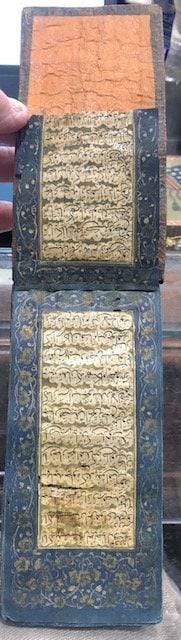
- The first page, half of which is missing, and the second page have been reattached upsidedown.
- Category
- Autographs & Manuscripts
- Record
- S.I.3787
17th/18th century Arabic QUR'AN Surahs and Prayers manuscript
12mo. (6-1/4" x 3"). The first page, half of which is missing, and the second page have been reattached upside down.
The Quran (/kʊrˈɑːn/, kuurr-AHN; vocalized Arabic: اَلْقُرْآنُ, Quranic Arabic: ٱلۡقُرۡءَانُ al-Qurʾān [alqurˈʔaːn], 'the recitation'), also romanized Qur'an or Koran, is the central religious text of Islam, believed by Muslims to be a revelation from God. It is organized in 114 chapters (pl.: سور suwar, sing.: سورة sūrah), which consist of verses (pl.: آيات ʾāyāt, sing.: آية ʾāyah, cons.: ʾāyat). In addition to its religious significance, it is widely regarded as the finest work in Arabic literature, and has significantly influenced the Arabic language. Muslims believe that the Quran was orally revealed by God to the final prophet, Muhammad, through the archangel Gabriel incrementally over a period of some 23 years, beginning in the month of Ramadan, when Muhammad was 40; and concluding in 632, the year of his death. Muslims regard the Quran as Muhammad's most important miracle; a proof of his prophethood; and the culmination of a series of divine messages starting with those revealed to Adam, including the Torah, the Psalms and the Gospel. The word Quran occurs some 70 times in the text itself, and other names and words are also said to refer to the Quran. The Quran is believed by Muslims to be not simply divinely inspired, but the literal word of God. Muhammad did not write it as he did not know how to write. According to tradition, several of Muhammad's companions served as scribes, recording the revelations. Shortly after the prophet's death, the Quran was compiled by the companions, who had written down or memorized parts of it. Caliph Uthman established a standard version, now known as the Uthmanic codex, which is generally considered the archetype of the Quran known today. There are, however, variant readings, with mostly minor differences in meaning. The Quran assumes familiarity with major narratives recounted in the Biblical and apocryphal scriptures. It summarizes some, dwells at length on others and, in some cases, presents alternative accounts and interpretations of events. The Quran describes itself as a book of guidance for humankind ( 2:185). It sometimes offers detailed accounts of specific historical events, and it often emphasizes the moral significance of an event over its narrative sequence. Supplementing the Quran with explanations for some cryptic Quranic narratives, and rulings that also provide the basis for Islamic law in most denominations of Islam, are hadiths—oral and written traditions believed to describe words and actions of Muhammad. During prayers, the Quran is recited only in Arabic.
Free shipping via USPS for United State purchaser within the continental U.S., International shipping determined using USPS Priority Express, DHL, FedEx, or Parcel Monkey.
We are located within City Antiques in Historic Roswell, Georgia at 700 Holcomb Bridge Road, Roswell, GA. 30076. We would love to have you visit, or email us at sidekerbookseller@gmail.com for specific wants or needs, thanks!
Condition
Condition report available on request — ask and we will send a written report with additional photographs.
Guaranteed authentic and as described · 7-day returns · free US shipping — our terms. Subject to prior sale.